
What Is Lotus365 Exchange?
If you’ve been searching around and keep landing on the term “lotus365 exchange,” here’s the short version: a betting exchange is not the same thing as a regular bookmaker. Instead of betting against the house, you’re matched with other users — you can “back” an outcome the same way you would on a normal betting site, or you can “lay” it, which means taking the opposite side and stepping into the bookmaker’s shoes yourself. Lotus365 Exchange sits in this category, with markets spread across cricket and a handful of other sports. In this guide, we’ll walk through how the exchange actually works, what login and registration usually look like, how payments tend to function, and — probably the part most reviews skip — how to check whether the platform you’re on is genuinely the real Lotus365 Exchange before you put any money near it.
How a Betting Exchange Works
If you’ve only ever used a standard betting app, exchanges can feel like a different world at first. It’s not complicated once it clicks, but it’s worth getting right before you risk real money on this or any similar platform.
Back vs Lay Explained
Backing an outcome simply means you think it’s going to happen. Back India to win a match, and you’re betting exactly the way you would with any regular bookmaker.
Laying is the flip side. If you lay India to win, you’re saying “I don’t think this happens” — and you take on the bookmaker’s role for that particular bet. Somebody else backs India; if India loses, their stake becomes your win. If India wins instead, you’re the one paying out.
This back-and-lay setup is really what separates an exchange from a normal betting site. Every single bet needs a matching opposite — two users trading against each other rather than everyone betting against the house.
Stake vs Liability (Worked Example)
Backing is the easier one to picture. Your risk is capped at your stake. Back a team for ₹500 at odds of 2.0, and the worst case is losing that ₹500 — the best case is walking away ₹500 richer.
Laying doesn’t work quite the same way, and this trips up a lot of newcomers. Your real risk isn’t the stake — it’s your liability. Say you lay a team at odds of 3.0, staking ₹500. If that team loses (meaning your lay bet wins), you pocket the ₹500 from whoever backed them. But if that team actually wins, you owe them their stake times (odds minus 1) — so ₹500 x 2.0, which comes out to ₹1,000. That ₹1,000 is your liability, and it’s usually bigger than the stake itself, which is exactly why people get caught out if they don’t do the maths first.
Lotus365 Exchange Features
Cricket & Live/In-Play Markets
Cricket tends to be the busiest market on an exchange like this, especially once a big tournament kicks off. Beyond the usual match-winner odds, you’ll often find session or “fancy” markets — bets on smaller chunks of the game, like how many runs come off an over — alongside live, in-play markets where the odds keep shifting as the match actually unfolds. That in-play pricing moves in real time based on what’s happening on the pitch, which is a very different experience from fixed pre-match odds, and it means you need to stay a bit more switched on if you’re tracking a market as it develops.

Login, Registration & Account Access
Getting into an exchange platform like this is normally done through a website or an app, where you set up an account using some basic details and a form of ID. In theory, that should be a simple, self-serve process — register, verify who you are, log in whenever you want, done.
In practice though, a lot of the content floating around about Lotus365 Exchange pushes people toward getting an “ID” through a WhatsApp agent or some third party, instead of just registering directly. That’s worth pausing on. A genuine platform doesn’t need a middleman handing out login credentials, and going through an unverified agent means handing your personal details — and often your money — to a stranger before you’ve even confirmed the platform is legitimate. If you’re thinking about signing up, look for a direct, official registration route rather than a shortcut offered over chat.
Deposits & Withdrawals: What to Check
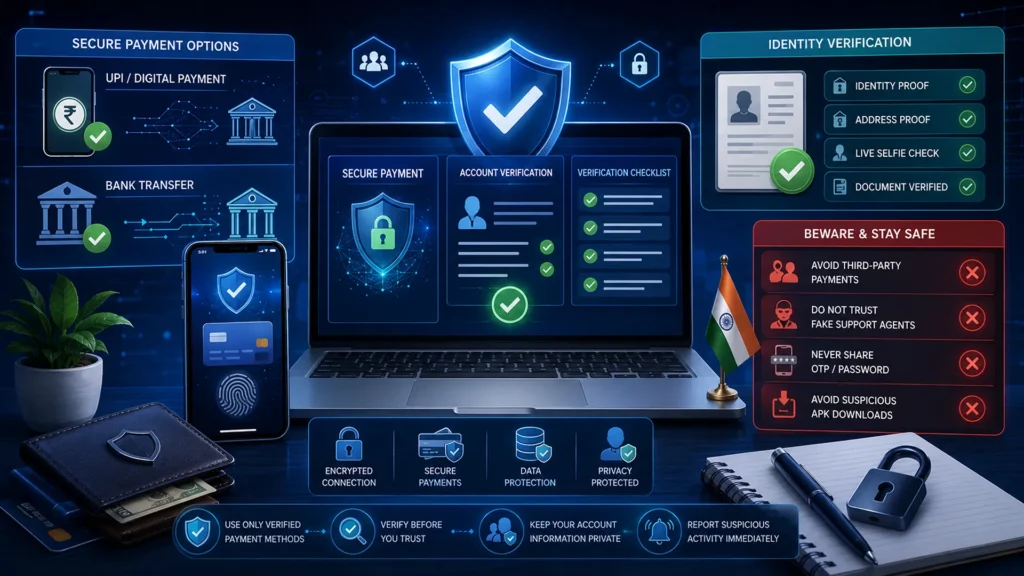
Exchange platforms operating in India usually support UPI, bank transfers, and a few e-wallets for both deposits and withdrawals. Those are the payment options you’ll most likely be offered.
Before you send anything, it’s worth running through a quick check:
- Does the payee name actually match the platform, not some individual’s personal account or an unrelated business?
- Does the payment page’s URL match the domain you registered on in the first place?
- Are you being asked to route money through a “third-party” or agent account instead of the platform directly?
None of this promises anything about how fast or reliable withdrawals actually are — that’s not something to just take on faith from a review site. It’s really about lowering the odds of your money going somewhere it shouldn’t.
Domain Verification: Avoiding Fake Lotus365 Websites
Here’s one of the more annoying parts of searching for lotus365 exchange online: there isn’t just one domain out there. Search results throw up several variations — lotus365.in, lotus365.blue, lotus365.win, and a bunch of exchange-specific subdomains too. Some of these might be genuine, some could be regional mirrors, and some are probably fake copies built to look almost identical to the real thing.
Just having “Lotus365” in the URL doesn’t prove anything on its own. Before you log in anywhere or type in payment details, it’s worth taking thirty seconds to check:
- Does the domain match one you’ve used before, or one that’s referenced consistently across the platform’s own official pages?
- Did you land on this site through a direct search, or through a link someone unverified sent you?
- Is the page asking for anything unusual — extra permissions, app downloads, details that go beyond a normal login?
If a link came to you through WhatsApp, a random forum post, or some referral you can’t place, treat it as unverified until you’ve checked it yourself.
Is Lotus365 Exchange Legit? A Verification Checklist
Rather than taking a “safe” or “secure” label at face value, it’s more useful to have your own way of checking. Here’s a simple framework to run any exchange website like this through:
| Check | What to Verify |
|---|---|
| Domain | Is the URL consistent with the platform’s known, official domain? |
| Ownership | Who’s actually running the website behind the branding? |
| License | Can any licensing claim be independently confirmed through a regulator, rather than just stated on the page? |
| Payments | Who actually receives your money when you deposit? |
| Support | Can you find official support beyond a random, unverified WhatsApp number? |
| Terms | Are the terms and conditions — including withdrawal rules — clearly published and easy to find? |
Working through this list only takes a few minutes, and it gives you something far more solid than a star rating on a review blog. If a platform can’t hold up to most of these checks, that’s a pretty clear signal to be cautious before committing any money.
Security & Phishing Risks
Anything related to betting tends to attract a lot of phishing attempts, and searches around Lotus365 Exchange are no exception. A few patterns worth watching for:
- Fake WhatsApp support — numbers claiming to be official agents offering to “set up your ID” or fix account issues
- Lookalike login pages — pages designed to look like the real thing but hosted on a slightly different domain
- OTP requests — no genuine support agent ever needs your one-time password; treat any such request as someone trying to take over your account
- Remote-access app requests — being told to install screen-sharing software to “fix” a login problem is a classic scam move
- Unverified APK files — app files shared outside an official store or a verified domain carry a real risk of malware
None of this means every message you get is a scam. But if something’s pushing you to act fast — sharing an OTP, installing an app, sending money to a new account — slow down and check first.
Legal & Regulatory Status in India
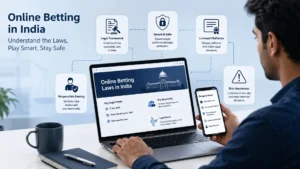
Online betting regulation in India isn’t one neat, uniform rule. It’s a mix of central legislation and state-level laws, and the picture can shift depending on which state you’re actually in. Some states have specific restrictions on online betting and gambling; others don’t touch it as directly. It’s also an area that keeps evolving, so what applies today might not hold in a year.
Rather than trusting a review article’s claim that Lotus365 Exchange is “legal” or “totally safe to use,” it’s worth checking current, authoritative sources — official government or state gaming authority pages — for whatever applies where you live. This guide isn’t a replacement for that, and it isn’t making a legal call either way. It’s simply flagging that the real picture is a lot more layered than most promotional content lets on.
Common Problems & Troubleshooting
| Problem | Likely Reason | Safe Action |
|---|---|---|
| Website won’t open | Domain might be blocked, down, or you’re on an unofficial mirror | Confirm you’re on a verified domain before trying again |
| Login rejected | Wrong credentials or a flagged account | Use the official password recovery route, skip third-party “fixes” |
| OTP not arriving | Network delay or a wrong registered number | Wait it out and retry through official channels only |
| Password forgotten | Standard account hiccup | Use the platform’s built-in recovery process |
| Withdrawal delayed | Normal processing time or a verification hold | Check the official terms — don’t pay anyone to “speed it up” |
| Suspicious login page | Possible phishing attempt | Don’t enter any details; verify the domain on your own first |
Pros & Cons
What exchange-style betting tends to offer:
- Access to back and lay markets, not just fixed bookmaker prices
- Live, in-play pricing that reacts to what’s actually happening in the match
- A decent spread of payment methods — UPI, bank transfer, e-wallets
Where it gets riskier:
- Domain confusion makes it genuinely hard to know which site is official
- Heavy reliance on WhatsApp agents for sign-up raises real verification concerns
- Legal status shifts by state and isn’t clearly settled
- “Safe and secure” claims often come with little independent evidence behind them
Alternatives to Consider
Lotus365 Exchange isn’t the only exchange-style platform around — similar back-and-lay betting exists elsewhere too. Whichever one you’re weighing up, the same verification checklist applies: confirm the domain, figure out who’s actually behind it, look for licensing you can independently check, and be wary of any sign-up process that routes through an unverified third party instead of the platform itself.
FAQ
Is Lotus365 Exchange safe to use?
There isn’t independent, verifiable evidence backing the blanket safety claims you’ll see on review sites. Run the checklist above against the specific domain and access route you’re being offered before making a ca
What does back and lay mean?
Backing means betting on something happening; laying means betting against it, effectively stepping into the bookmaker’s role for that bet.
How do I verify the exchange domain?
Check that the URL matches the domain you’ve used consistently, avoid links shared through WhatsApp or unfamiliar referrals, and be cautious of variations — different extensions or subdomains — that weren’t part of your original registration.
Do I need a WhatsApp agent to get an ID?
No genuine platform requires a third-party agent to open an account for you. Treat offers like that with suspicion and look for a direct, official registration path instead.
Conclusion
Platforms like Lotus365 Exchange come with real complexity — both in how the markets actually work and in how tricky it can be to confirm what you’re really dealing with. The safest approach isn’t leaning on a review site’s rating; it’s checking the domain, the operator, and the terms yourself before you log in or send a single rupee.